You have 0 items in your cart

Crafts that empower, uplift and inspire.
Originally from Embo, Thabiso and his family moved to KwaNyuswa in 2013, when he was 15 years old. His eyesight had started troubling him when he was just six and gradually deteriorated until he became completely blind at 18.
He was the first person in his family to experience blindness, so it was a new experience for everyone. There was a lot of adjusting, learning and finding new ways to navigate everyday life.
Long before he started making mats, Thabiso was already exploring his creative side through music. He attended a music academy where he learned to play the piano and later joined a group called Ubizo.
The group performed at various events, including at the Hillcrest AIDS Centre Trust, and even had the opportunity to shoot a music video and appear on television. He looks back on this period fondly, describing it as a wonderful time in his life when he learned a great deal.
Unfortunately, after Covid, the group eventually went their separate ways. They no longer had a suitable space to perform, and some of their equipment had also gone missing.
Music, however, remains a big part of his life. He still performs at church and says he would happily take up more opportunities to perform. Although he previously performed as part of a group, he is confident enough to perform on his own. When asked whether he gets nervous in front of an audience, he was quick to make it clear that he is definitely not shy!
His mother also enjoys singing at church, so music is something they share. Thabiso hopes to pursue singing professionally one day. He has already taught others to play the piano and dreams of eventually establishing his own music academy where he can teach people to play different instruments.
Thabiso’s introduction to mat-making came through a programme offered at his church in partnership with SEDA (Small Enterprise Development Agency). Participants could choose between gardening and weaving, and he decided that weaving would be the more accessible option for him.
He was the only blind person taking part in the programme, but he was eager to learn.
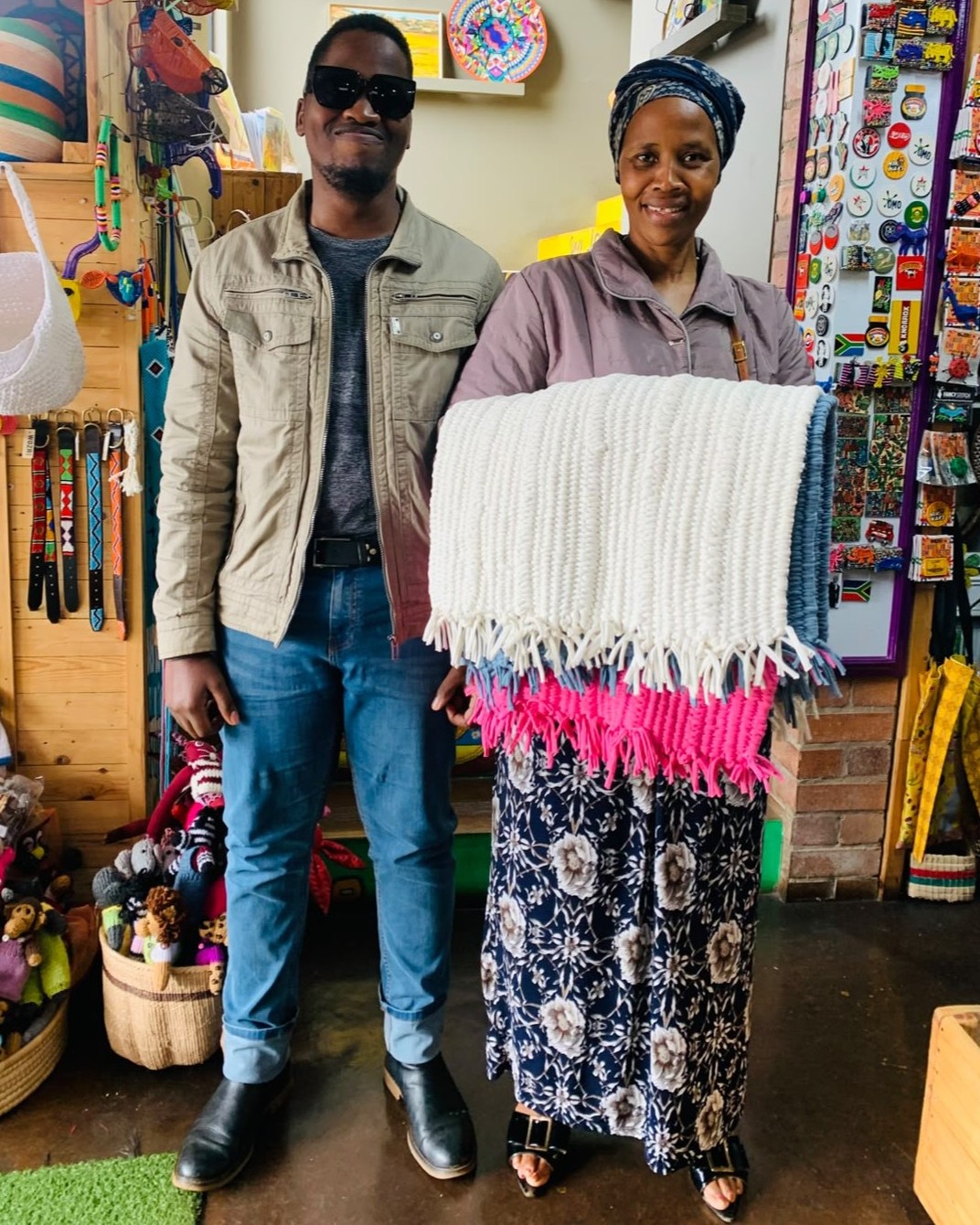
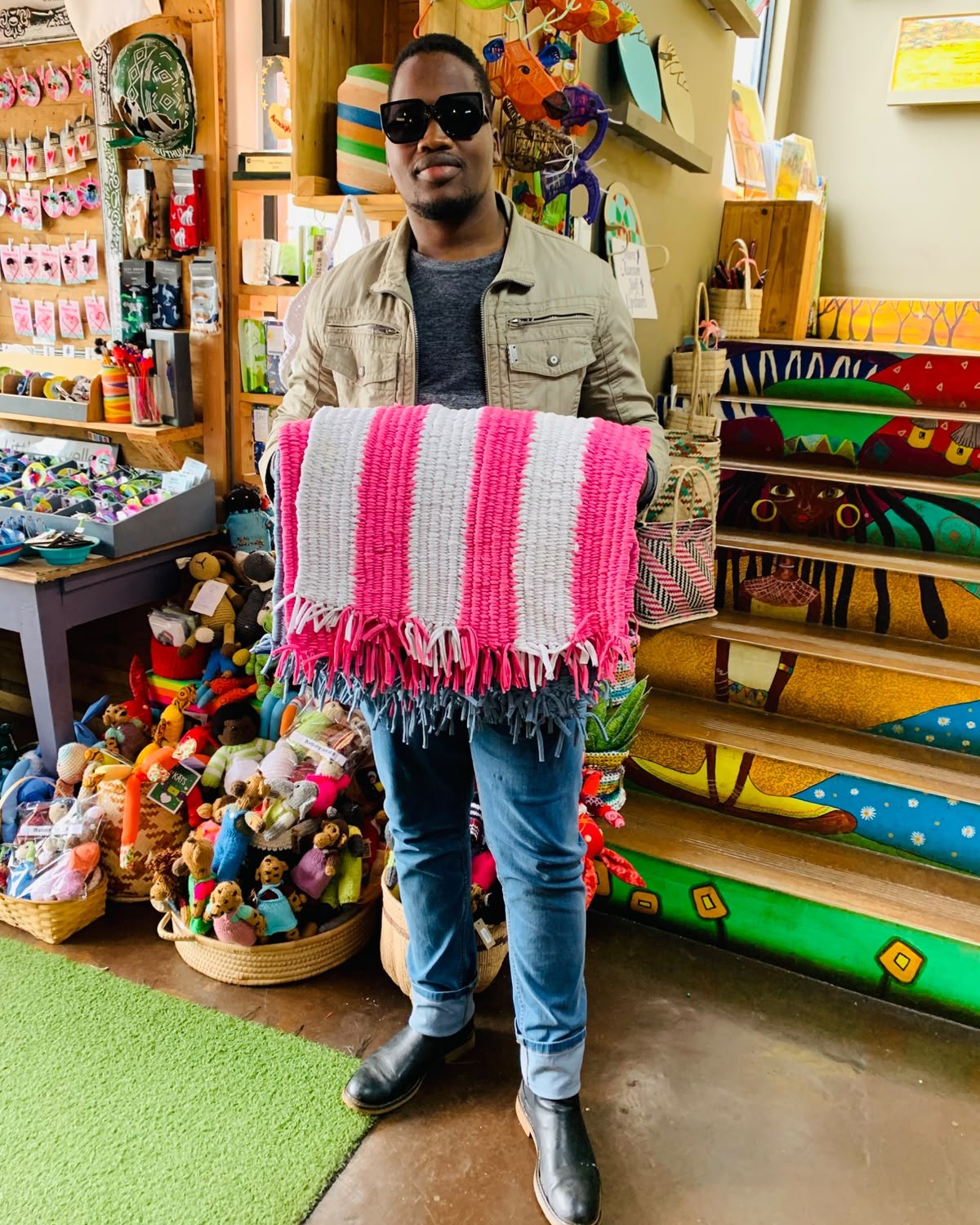
The mats are made using fabric sourced from a clothing factory. Using sticks as his weaving tools, Thabiso does most of the work himself. His mother helps him with taking measurements and tightening the ends of the finished mats.
When he first joined the programme, his intention was to learn a skill that could help him earn an income. As he continued practising, however, something changed. He developed a genuine love for the craft.
He believes that working with your hands requires patience and commitment. You have to enjoy what you’re doing, otherwise, it’s easy to give up when things become difficult. It’s a lesson he has come to appreciate through his own experience.
Behind Thabiso is a family that has played an important role in helping him develop his independence. He lives with his parents and two younger siblings in KwaNyuswa. His father is a taxi driver, while his mother works as a domestic worker.
His mother is particularly involved in supporting his work, but their relationship is about much more than the practical help she provides.
She admits that it wasn’t easy at first to let him go places on his own or allow him to do certain things independently. As a mother, she naturally worried about his safety and how he would manage.
Over time, though, her confidence grew. Each time he returned from school having learned something new, she became more assured of what he could achieve. She began to realise that he was capable of learning, growing and doing things for himself, and gradually became more comfortable giving him that independence.
Today, Thabiso is grateful that his family allows him to be himself. He appreciates their patience as he had to relearn how to navigate life after losing his sight, and the fact that they have never excluded him or limited his opportunities because of his disability.
He describes himself as the only creative person in the family, a claim his mother was quick to dispute. She insists that she is creative too because she helps with his mat-making! Their playful disagreement brought plenty of laughter during our conversation.
Although Thabiso has received a few requests from people interested in buying his mats, he says the market has been slow because he currently markets his work from home. He hopes that being associated with Woza Moya will give his products greater exposure and help him reach more customers.
His ambitions don’t stop at selling mats. He dreams of establishing his own mat-making company where he can employ two or three people and help them earn a living. For Thabiso, success isn’t measured only by what he can achieve for himself. He sees it in the opportunities he can create for others. Then there’s his dream of opening a music academy. Both ambitions reflect his desire to keep learning, creating and sharing what he knows.
He believes that disability is not a disqualification and that his determination has grown stronger over time. Seeing other blind people going about their daily lives independently, using computers and visiting shopping centres on their own, helped him recognise what was possible. Their example gave him the confidence to pursue his own interests and live a meaningful life.
His advice to anyone who feels limited by their circumstances, whether physically or otherwise, is simple: remember that you are bigger than the thing holding you back. Fix your eyes on the future and never stop learning.
There is clearly much more Thabiso hopes to do, and he isn’t short of ideas. For now, he’s enjoying his weaving, continuing to nurture his love for music and looking forward to the opportunities that lie ahead.
 Small South African Flag Pin
R10.00
 Christmas Balls in Various Colours & Sizes
Price range: R50.00 through R160.00
 South African Flag Lanyard
R140.00
 Beaded Pen in Zulu Colours
R65.00
 Beaded Glasses Chain
R45.00
 South African Flag Beaded Key Ring
R40.00
 Assorted Lanyards
R140.00
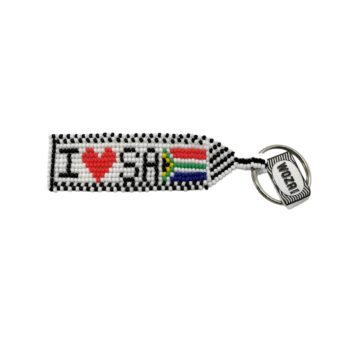 I Love SA Keyring
R50.00
 Stars: Beaded Stars
Price range: R50.00 through R65.00
 Angels: Beaded Wirework Christmas Angel
R65.00