You have 0 items in your cart

Crafts that empower, uplift and inspire.
Before the weaving even begins, the grass must first change colour. Large bundles are gathered and prepared, then placed into pots where natural ingredients slowly draw out deep browns, warm reds and dark earthy tones. It is an old method, one that relies on plants, patience and knowledge passed down through generations. Long before modern paints or dyes were ever considered, this was how the grass was prepared for weaving. Even today, Solly continues to follow this traditional process, allowing nature to colour the grass before it is shaped by hand.
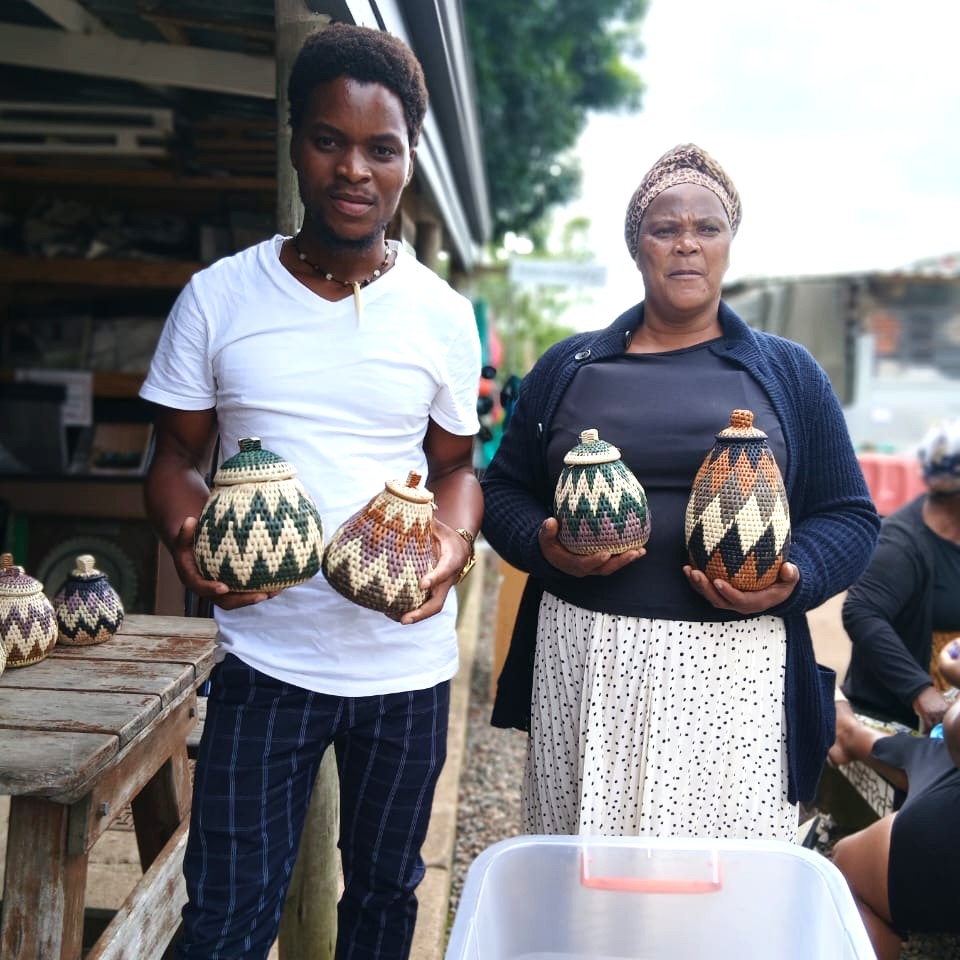
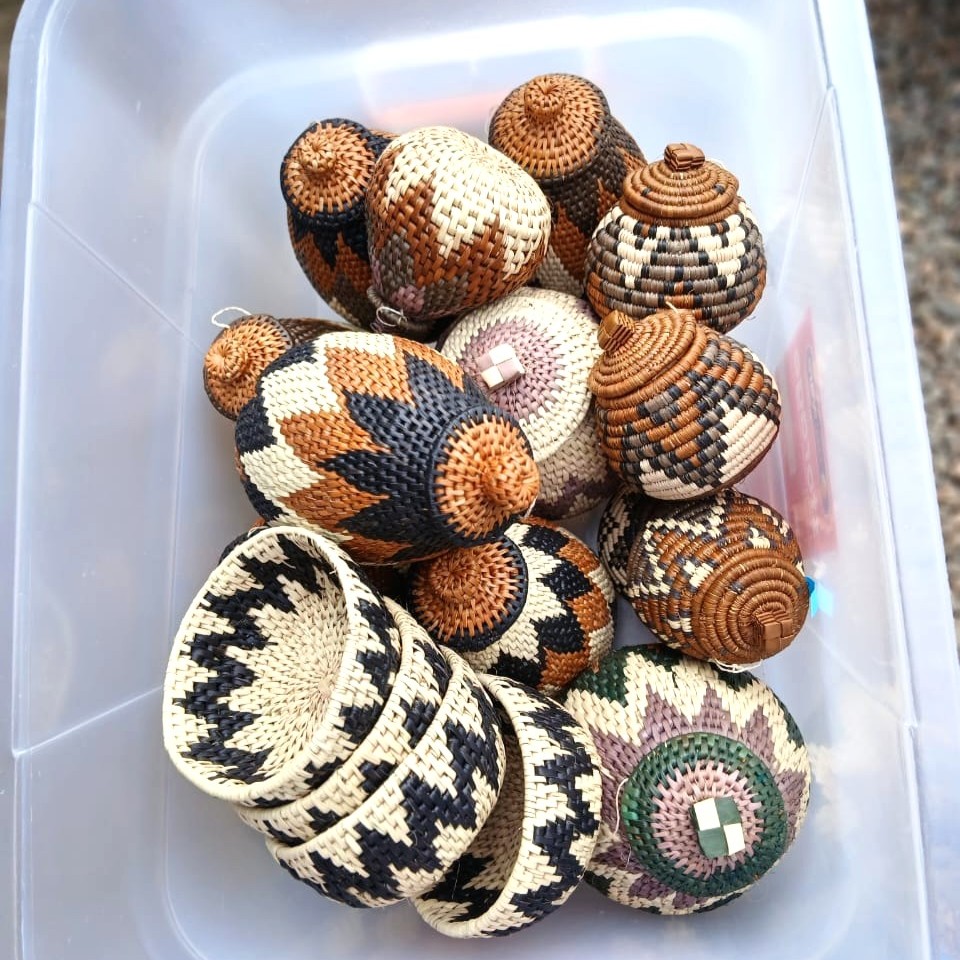
The baskets, she makes are known as Izinkamba zekhwani, Ikhwani is a type of grass prized for its durability and aesthetic appeal, it grows in valleys near rivers and wet areas in KwaZulu-Natal, where it has been harvested for generations to make baskets, brooms, and grass mats – essential items in Zulu households. For generations, women have woven these baskets not only as useful household items, but also as a way to support their families, shared between mothers, daughters and daughters-in-law, ensuring that the knowledge lives on through careful hands and patient teaching.
For Solly, the craft came through the family she married into. Like many women before her, she learned the techniques from those around her, absorbing the rhythms of the work overtime. The process requires both strength and delicacy: preparing the grass, dyeing it with natural materials, and then slowly weaving each strand together to form the strong, beautifully patterned baskets that are recognised across the region.
The making of Izinkamba zekhwani is not rushed work. Each basket grows gradually, coil by coil, as the weaver shapes and tightens the grass into place. The patterns and colours that emerge reflect both skill and tradition. What begins as simple grass becomes something both practical and beautiful, a piece of craftsmanship that carries the story of the women who made it.
Today, Solly continue this practice much the same way it has been done for generations. By using natural dyes and traditional weaving techniques, they keep the original methods alive. In every basket they complete, there is more than just woven grass. There is history, family knowledge, and the quiet persistence of a craft that has helped women earn a living for many years.
 Small South African Flag Pin
R10.00
Small South African Flag Pin
R10.00
 Christmas Balls in Various Colours & Sizes
Price range: R50.00 through R160.00
Christmas Balls in Various Colours & Sizes
Price range: R50.00 through R160.00
 South African Flag Lanyard
R140.00
South African Flag Lanyard
R140.00
 Beaded Glasses Chain
R45.00
Beaded Glasses Chain
R45.00
 Beaded Pen in Zulu Colours
R65.00
Beaded Pen in Zulu Colours
R65.00
 Assorted Lanyards
R140.00
Assorted Lanyards
R140.00
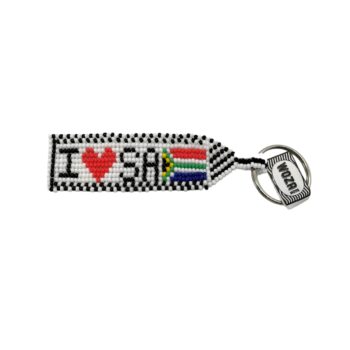 I Love SA Keyring
R50.00
I Love SA Keyring
R50.00
 Stars: Beaded Stars
Price range: R50.00 through R65.00
Stars: Beaded Stars
Price range: R50.00 through R65.00
 South African Flag Beaded Key Ring
R35.00
South African Flag Beaded Key Ring
R35.00
 Birthday Pin
R40.00
Birthday Pin
R40.00